
When the Badge Picks the Bet Before the Brain Does
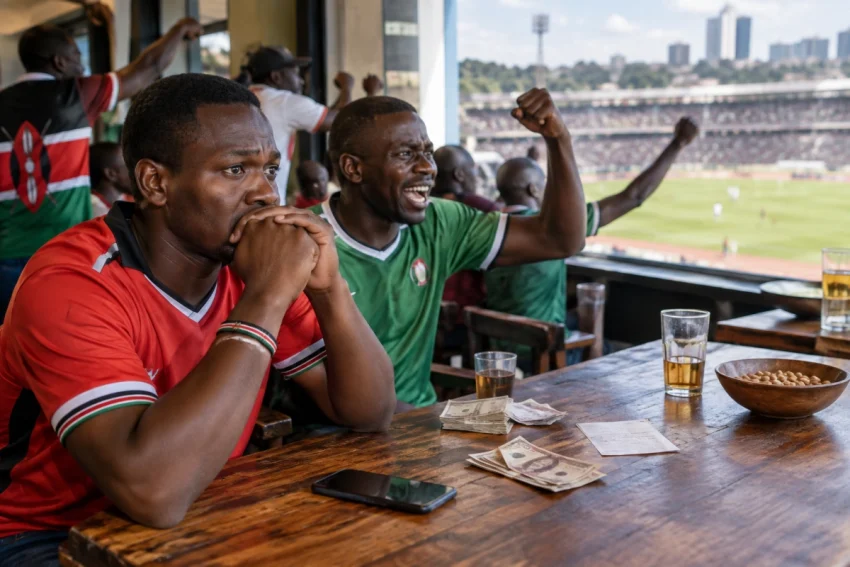
It’s Saturday afternoon and team news is still an hour away. Across Nairobi, Kisumu and Mombasa, thousands of fans have already put their club on a betslip. For an Arsenal supporter, the home win goes on first, and the rest of the slip gets built around it.
That habit feels harmless because it comes from genuine love for the club. But in football betting Kenya-style, where the Premier League and KPL fill the same weekend, loyalty is one of the most expensive inputs a punter can bring to the table.
Supporter bias rarely shows up as one big, obvious mistake. It works through small decisions, like trusting a shaky defence or ignoring an injury list. It also shows up as a reluctance to accept that a rival might simply be better this season.
Why Fans Struggle to Judge Their Own Club Fairly
Betting is now part of how many Kenyans watch football. Recent surveys suggest that around 42% of Kenyan respondents bet regularly on sports. About 27% place or review bets at half-time, which is exactly when emotions run hottest.
The trouble is that fans read matches through the lens of hope. A large study of more than 53,000 predictions, published in 2019, found that supporters consistently overestimated their favourite team’s chances of winning. A Liverpool fan remembers the comeback nights, and a Chelsea fan remembers the cup runs. The dull away draws fade from memory.
Two familiar biases feed this. Confirmation bias makes fans seek out stats that support what they already believe. Recency bias makes one good result feel like a turning point.
The KPL is no different. Gor Mahia won the 2025–26 title with 69 points, and that success gives K’Ogalo supporters a confidence that can spill into every fixture. AFC Leopards finished second on 64 points, which gives Ingwe fans a hope that can do the same.
Backing Your Team at Odds That Offer No Value
The most common loyalty mistake is backing a big club at short odds without asking whether those odds make sense. Popular teams attract heavy public money. That demand pushes their prices down, and Manchester United are often cited as a classic example.
Short odds carry a hidden message about probability. Here’s roughly what each price implies:
- Odds of 1.30 imply about a 77% chance of winning
- Odds of 1.50 imply about a 67% chance
- Odds of 2.00 imply about a 50% chance
So when a fan backs United at 1.40 away from home, the real question is simple. Do they genuinely win that match seven times out of ten? If the honest answer is “probably not,” the bet is loyalty, not value.
Short prices can also move sharply once the ball is rolling. A favourite priced at 1.30 before kick-off can drift to around 3.50 after conceding early. Fans who back their team again at that point are often chasing a feeling rather than reading the game.
Overpaying for a win is the loud mistake, the one most punters eventually notice. The quieter and costlier habit is refusing to bet against your own club, even when every sign points the other way.
The Bet Most Fans Will Never Place
Ask a Chelsea supporter to back the opposition and many will laugh it off. It feels disloyal, almost like wishing for defeat. So even when the form guide, injury list and fixture schedule all point one way, they simply skip the match or back their own side anyway.
That instinct costs money in two ways. First, fans pass up bets they are unusually well placed to make. A committed Arsenal fan often knows about a tired midfield or a nervous goalkeeper long before the wider market reacts. Second, they keep backing their team through bad spells, when prices have not yet caught up with how poorly the side is playing.
Some punters treat a bet against their club as a hedge. If the team wins, they celebrate. If it loses, the payout softens the blow. Whether or not that suits you, the point is that the decision should come from the evidence, not from guilt.
The Accumulator That Always Starts With Your Club
Multi-bets are hugely popular in Kenya because small stakes can promise large returns. But loyal fans tend to add their club to every accumulator, whether the fixture deserves a place or not.
Every extra selection multiplies the risk. A slip with five legs at 1.40 each looks safe on paper, yet the chance of all five landing is far lower than most punters assume. When one of those legs is there because of the badge, the slip carries a weak link from the start.
It is worth watching for these warning signs:
- Your team appears on every slip, regardless of opponent or venue
- You add them before checking team news or recent form
- You feel uneasy building a slip that leaves them out
- Your club is usually the leg that lets you down, yet it stays in
If most of those sound familiar, loyalty is building your accumulators for you.
Derbies, Rivalries and the Limits of Form
Rivalry matches are where supporter bias is at its most intense. The Mashemeji Derby between Gor Mahia and AFC Leopards carries decades of history, and fans on both sides walk into it convinced that pride will decide the result. The same is true of Arsenal against Tottenham, or Liverpool against Manchester United.
Derbies often behave differently from ordinary fixtures. Tension can make games cagey and scrappy, and the gap in league position tends to matter less than usual. A side that has dominated the season can be dragged into a tight, physical contest by a rival with nothing to lose.
Fans tend to misjudge these games in predictable ways. They overrate their own side’s hunger, underrate the opponent’s motivation and assume the atmosphere will favour them. A title-winning season can make a K’Ogalo supporter feel untouchable, while a strong runner-up finish can convince an Ingwe fan that this is finally their day.
A calmer approach looks past the winner entirely. Markets such as the draw, under goals or cards may reflect how these matches actually unfold far better than a confident home or away pick driven by rivalry.
A Simple Pre-Bet Check to Separate the Fan From the Bettor
None of this means you have to stop betting on your own club. It means the decision needs one honest pause before the slip is confirmed. A short checklist creates that pause, and it takes less than a minute.
Before any bet involving your team or its biggest rival, ask yourself:
- Would I place this bet if I supported neither side? If the answer is no, the badge is making the call.
- Do the odds match my honest view of the chances? Convert the price into a rough percentage and ask whether your team really wins that often.
- Have I checked team news, recent form and the fixture schedule? Fatigue, injuries and away form matter more than last season’s glory.
- Am I betting against my club when the evidence says I should? If you never do, loyalty is filtering your options.
- Does this selection earn its place on the accumulator? Every leg should be there on merit, not out of habit.
- Am I reacting to emotion? A half-time bet placed in frustration or excitement is rarely a considered one.
If a bet passes all six questions, go ahead with confidence. If it stumbles on two or three, walk away or reduce the stake. It also helps to set a fixed budget for the weekend before the first whistle, and to use the deposit limits and time-outs most betting sites offer. Organisations such as BeGambleAware share practical guidance on keeping betting under control.
Keep the Scarf, Leave the Bias at Kick-Off
Loyalty is one of the best things about football. It carries a Gor Mahia fan through a rain-soaked afternoon at Nyayo, keeps an Ingwe supporter believing before every Mashemeji Derby and keeps a Manchester United fan watching through a difficult season. That devotion belongs in the stands, in the group chat and in the songs.
It doesn’t belong on the betslip. The best bettors still care about their clubs. They simply know when to stop acting as a fan. They can wear the shirt on Saturday and still price the match with a cool head on Friday night.
Supporter bias wins quietly, one short price and one habitual accumulator at a time. Beating it doesn’t require giving up your club. It requires honesty about what you want to happen and what is actually likely to happen. Support your team with your heart, and place your bets with your head.