
AFC Leopards v Posta Rangers: What the Prices Say
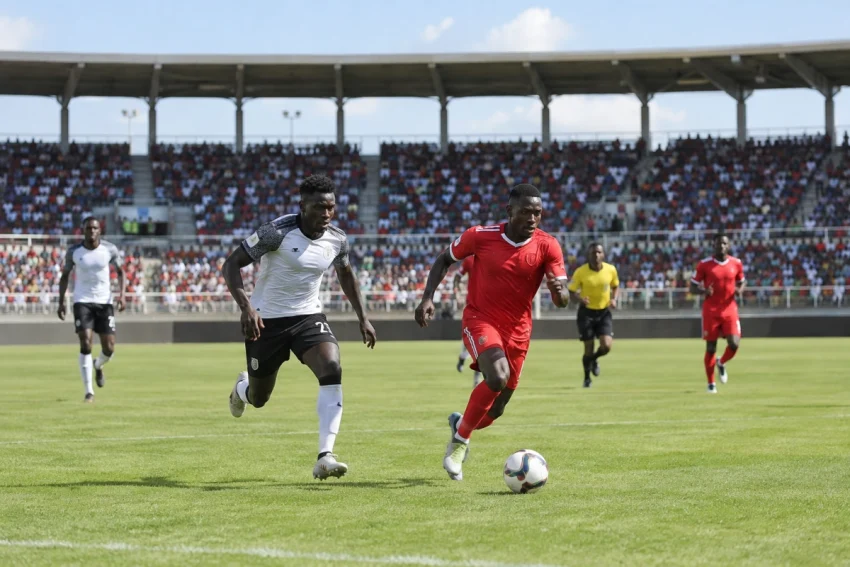
Take the KPL fixture listed for 21 February 2026. AFC Leopards were priced at 1.70, the draw at 3.10, and Posta Rangers at 4.95.
Most of us glance at those numbers and see one thing: Leopards are favourites. That’s true, but the odds say a lot more than that. They are the bookmaker’s opinion of how likely each result is, written as a price.
With football odds Kenya bettors see every weekend, the decimal format is the simplest place to start. Multiply your stake by the odds and you get your total return. A KSh 100 stake on Leopards at 1.70 returns KSh 170, which is KSh 70 profit plus your stake back.
Turning Decimal Odds into Implied Probability
Here is the conversion that changes how you read a betting slip: divide 1 by the odds. Multiply by 100 and you have a percentage.
Odds of 2.00 imply 50%, a coin flip. Odds of 1.50 imply about 66.7%. Now apply it to our KPL match:
- AFC Leopards at 1.70: about 58.8%
- Draw at 3.10: about 32.3%
- Posta Rangers at 4.95: about 20.2%
So the bookmaker is saying Leopards win a little under six times in ten. A bigger price simply means a lower chance. Posta at 4.95 is not “unlucky value”. It is a team the market rates at roughly one in five.
Why the Percentages Add Up to More Than 100
Add those three figures together: 58.8 + 32.3 + 20.2 comes to about 111%. A match has only three outcomes, so the true total should be 100%.
The extra 11% or so is the bookmaker’s margin, sometimes called the overround. It is built into every price so the bookmaker earns something whichever result lands. You never see it as a fee. You pay it through slightly shorter odds.
That matters because it means the 58.8% for Leopards is inflated. Strip out the margin and their fair chance is closer to 53%. If you pay 1.70 for a team that really wins 53% of the time, the maths is already slightly against you before kick-off.
This is one reason casual punters lose stakes without understanding why. A pick can be correct about the favourite and still be a poor bet at that price.
The margin also isn’t fixed. A KPL match can carry a different cushion from a big Premier League fixture, and that gap changes what a “fair” price looks like. Next, we’ll put a Premier League match beside this KPL example, work out the margin on each, and see why the same team can be good value one week and poor value the next.
Setting a Premier League Price Beside the KPL One
I can’t verify live prices for a specific Premier League fixture here, and they move by the hour, so the numbers below are illustrative. They are typical of a home favourite in a top-flight match. Check the real ones on your own betting app.
Say the home side is 1.70, the draw 4.00 and the away side 5.00. The implied probabilities are 58.8%, 25% and 20%. Together they come to about 103.8%.
That is a margin of under 4%, against roughly 11% in the Leopards match. The favourite’s price is identical at 1.70, but what sits behind it is not:
- Leopards at 1.70: implied 58.8%, fair chance about 52.9% after removing the margin
- Premier League home side at 1.70: implied 58.8%, fair chance about 56.6%
To get the fair figure, divide each implied probability by the total. For the Premier League example, 58.8 ÷ 103.8 gives 56.6%. It takes ten seconds on a phone calculator.
The same 1.70 hides a much bigger tax in one match than in the other. In the Premier League example you give up about two percentage points of probability to the bookmaker. In the KPL match it is nearly six. Thinner markets and less liquid leagues often carry fatter margins, which is why a familiar-looking price can be worse than it appears.
Why the Same Team Can Be Good Value One Week and Poor Value the Next
“Value” is not the same as “likely to win”. A bet has value only when the true chance of the outcome is higher than the probability built into the price. Break-even is the number to know: at 1.70 you need to win more than 58.8% of the time just to come out ahead.
Now picture Leopards in two different weeks. In the first, you believe they win this fixture about 55% of the time. At 1.70, the price asks for 58.8%. That is poor value, even if they are the better side. In the second week, a rival’s key players are missing, the price drifts to 1.95, and your honest estimate is still 55%. Break-even at 1.95 is about 51.3%, so you now hold an edge.
The team did not change. The price did. That is why backing a club you rate highly is not a strategy on its own. The question is always whether the odds ask for more or less than the club really offers.
A few things regularly shift the equation:
- Team news. Injuries, suspensions and rotation move the true chance, and bookmakers don’t always adjust at the same speed.
- Public popularity. Well-supported sides are often bet down to shorter prices than their form deserves.
- The margin itself. A heavier cushion pushes break-even higher before a ball is kicked.
Be honest about the second number in this comparison, your own estimate. It is a judgement, not a fact, and most of us overrate the teams we follow. If you can’t explain why you think a side’s chance is higher than the price implies, you probably don’t have an edge. You have a preference.
All of this can be boiled down to one quick habit, and it takes less time than placing the bet.
The One Check to Run Before Every Bet
Before you confirm any slip, divide 1 by the odds and ask one question: is my honest chance of this result higher than that percentage?
That is the whole habit. At 1.70, the break-even figure is 58.8%. At 4.95, it is 20.2%. If you can’t say, with a real reason, that the outcome is more likely than the price implies, leave the bet alone. Team news, a late injury or a quirk of the fixture can all be reasons. Loyalty to a club is not.
The margin makes this check even more worthwhile. In a market like the Leopards match, where the cushion is around 11%, the bar is higher than the headline price suggests. If you want a sharper read, divide the implied probability by the three-way total, as we did earlier, and compare your estimate with the fair number.
Bet on the Number, Not the Badge
Odds are not predictions you have to accept, and they are not a verdict on which team is better. They are prices, and a price is only good or bad relative to the chance behind it. A 1.70 shot in the Premier League and a 1.70 shot in the KPL can look identical and still cost you very different amounts.
Read the number, convert it, account for the margin, then compare it with your own honest view. Most of the time that process will tell you to pass, and passing is a perfectly good result. Only stake what you can comfortably afford to lose, and use a licensed operator. Kenya’s Betting Control and Licensing Board is the regulator to check.
Do that before every bet, and you will understand your slip better than most people who place one.