
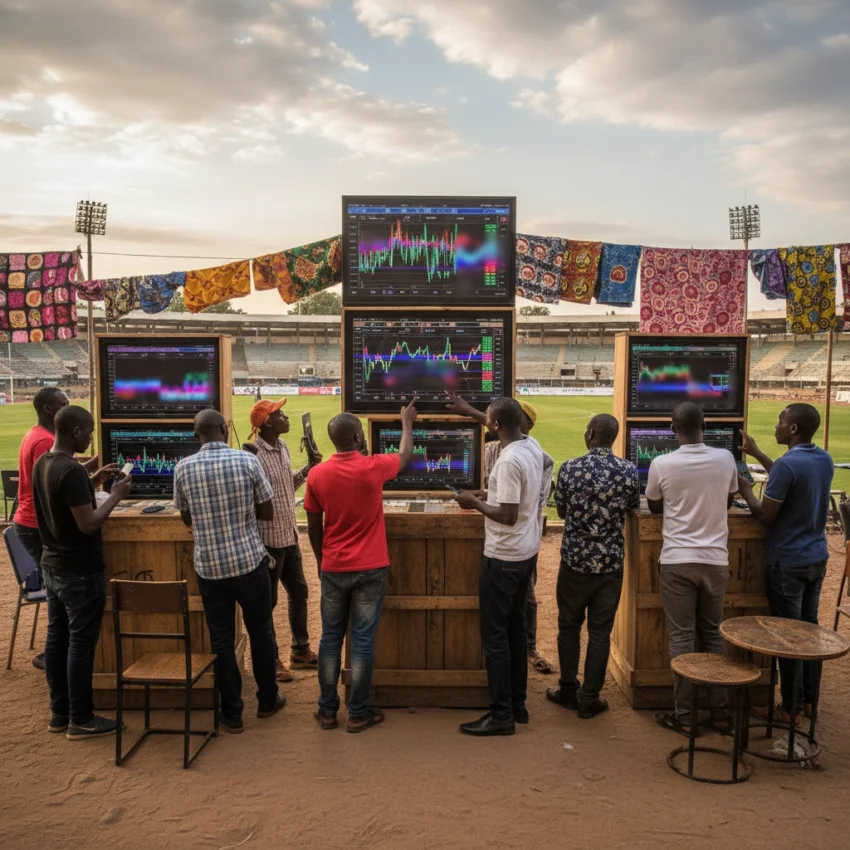
The Same Match, Different Prices — And It’s Not Random
Open three different bookmakers on your phone before a Premier League match and you’ll often see three slightly different odds for the same outcome. Not dramatically different — but different enough to matter over time. Most Kenyan bettors glance at one platform, place the bet, and move on. That habit is costing them more than they realise.
Understanding why football odds in Kenya vary between platforms isn’t about becoming a professional analyst. It’s about knowing enough to make a better decision with the same information you already have. The match is the match — the price you get for it shouldn’t be an afterthought.
How Bookmakers Actually Set Their Odds
Bookmakers don’t just guess at prices. Each platform has a team of traders — or increasingly, automated systems — that assess the probability of each outcome and convert that into odds. They factor in team form, injuries, historical head-to-head results, and market data from sharper bettors around the world.
But here’s where it gets interesting: different bookmakers weigh those inputs differently. One platform might lean heavily on what the European betting exchanges are showing. Another might adjust based on where Kenyan bettors are placing their money locally. A third might simply mirror a pricing feed from a larger international operator and apply their own margin on top.
That margin — called the overround or vig — is how bookmakers guarantee profit regardless of the result. It’s baked into every set of odds you see, which is why the combined implied probability of all outcomes in a market always adds up to more than 100%. The size of that margin, and how each bookmaker distributes it across outcomes, is one of the main reasons prices differ from one site to the next.
Why the Gap Widens on Certain Markets and Matches
Price differences tend to be small on high-profile matches — a Premier League clash between Arsenal and Manchester City, for instance, attracts enormous betting volume globally, which keeps bookmakers honest and prices tightly clustered. The moment you move into lower-profile markets — KPL matches, African qualifiers, or niche bets like Asian handicaps — the gaps between bookmakers often grow.
Less liquidity means less pressure on bookmakers to sharpen their prices. When fewer bettors are scrutinising a market, operators have more room to set odds based on their own internal models rather than competitive pressure. That’s when you’ll sometimes find one platform offering 2.10 on the same outcome another has priced at 1.85.
The same pattern applies to specific bet types. Mainstream markets like match result and both teams to score are usually priced tightly across platforms. More complex markets — correct score, first goalscorer, or in-play alternatives — show more variation, simply because they’re harder to price accurately and attract fewer comparison shoppers.
Knowing which markets are likely to show the biggest gaps is the first step. The next is understanding how to quickly identify when a difference in price is genuinely meaningful versus noise — and that comes down to a straightforward comparison method that’s easier to apply than most bettors expect.

How to Compare Odds Without Wasting Twenty Minutes Doing It
The practical obstacle most bettors run into isn’t awareness — it’s friction. Checking three or four platforms before every bet feels like extra work, especially when the match is approaching or you’re making quick in-play decisions. But the comparison process doesn’t have to be exhaustive to be effective. A focused, repeatable approach takes less time than most people assume.
Start by identifying the two or three bookmakers licensed and accessible in Kenya where you already hold accounts. You don’t need accounts everywhere — you need accounts on platforms that consistently differ in how they price certain markets. If you’ve noticed that one bookmaker tends to be stronger on African football while another prices European handicaps more generously, that pattern alone tells you where to look first depending on what you’re betting.
From there, the comparison becomes targeted rather than exhaustive. You’re not scanning every market on every platform — you’re checking the specific outcome you’ve already decided is worth backing, across the two or three platforms most likely to show a meaningful difference. That takes thirty seconds, not thirty minutes. The bettors who do this consistently aren’t working harder; they’re just working in the right direction.
When the Difference in Price Actually Changes the Maths
Not every price gap is worth acting on. A difference of 1.85 versus 1.87 on a high-confidence selection matters less than the same spread on a more uncertain outcome where your edge — if you have one — is already thin. The value of a better price scales with how much you’re staking and how close the bet is to the margin of profitability.
A useful way to think about it: if you’re backing an outcome you believe has a genuine 55% chance of occurring, the difference between getting 1.85 and 1.92 isn’t cosmetic. At 1.85, the implied probability is roughly 54% — you’re essentially at breakeven over time. At 1.92, the implied probability drops to about 52%, giving you a clear positive expectation on the same bet. The outcome hasn’t changed. Your assessment hasn’t changed. The price has — and that’s enough.
This is where many recreational bettors underestimate the cumulative effect of consistently taking slightly better prices. The improvement on any single bet looks trivial. Across fifty bets over a season, the difference in return can be substantial — particularly if you’re backing outcomes at moderate odds rather than heavy favourites where the margins are already compressed.
The Role of Local Betting Behaviour in Shaping Kenyan Odds
One factor that often goes unacknowledged is how the collective betting behaviour of Kenyan users directly influences the prices bookmakers offer locally. When large volumes of money flow onto one outcome — say, a popular team that generates strong public support domestically — bookmakers operating in the Kenyan market will often shade their odds on that outcome to manage their liability.
This creates a genuinely interesting dynamic. A bookmaker heavily exposed to local money on one side of a market may shorten their odds on that selection while quietly lengthening the price on the alternative. A platform with a more international user base, less concentrated on the same match, might not make the same adjustment. The result is a price discrepancy that has nothing to do with the actual probabilities involved — it’s purely a reflection of where the money is sitting.
For bettors who pay attention, this represents one of the more exploitable gaps in the market. If you can identify matches that attract disproportionate local interest — high-profile Champions League nights, matches involving teams with strong Kenyan followings — you have a reasonable basis to expect that locally-focused platforms will be pricing the popular side more cautiously than their international counterparts. That’s not a guarantee of value, but it’s a signal worth considering before you commit to a price without checking alternatives.
- Matches with heavy domestic interest often see odds compressed on the popular outcome across locally-focused bookmakers
- International platforms with more balanced exposure may hold a better price on the same outcome longer into the day
- In-play markets are particularly susceptible to this effect, as local sentiment can move prices faster than the underlying match situation warrants
Understanding this dynamic doesn’t require sophisticated data tools. It requires knowing your platforms well enough to recognise when a price looks out of step — and having the discipline to check rather than assume.
The Habit That Separates Informed Bettors from Everyone Else
None of what’s been covered here requires a background in mathematics or hours of research before each match. It requires a shift in default behaviour — from accepting the first price you see to treating that price as a starting point rather than a conclusion.
The bookmakers available in Kenya are competing for your money, and that competition expresses itself in the odds they offer. Sometimes the differences are negligible. Sometimes they’re significant enough to change whether a bet has positive expectation or not. The only way to know which situation you’re in is to look — and looking, done efficiently, costs very little.
Odds comparison is one of the few areas in football betting where the improvement in your results is entirely within your control, independent of predictions, form analysis, or match outcomes. You don’t need to be right more often. You don’t need a better system for picking selections. You simply need to take a better price for the same decision you were already going to make.
Over time, that discipline compounds. Bettors who consistently take the best available price on their selections aren’t chasing some abstract edge — they’re capturing real, measurable value that recreational bettors leave behind on every bet. Understanding how bookmaker odds are calculated and compared across markets gives you a clearer foundation for doing exactly that.
The match is the same on every platform. The price doesn’t have to be. That gap — small, persistent, and largely ignored — is precisely where a more considered approach to betting begins.