
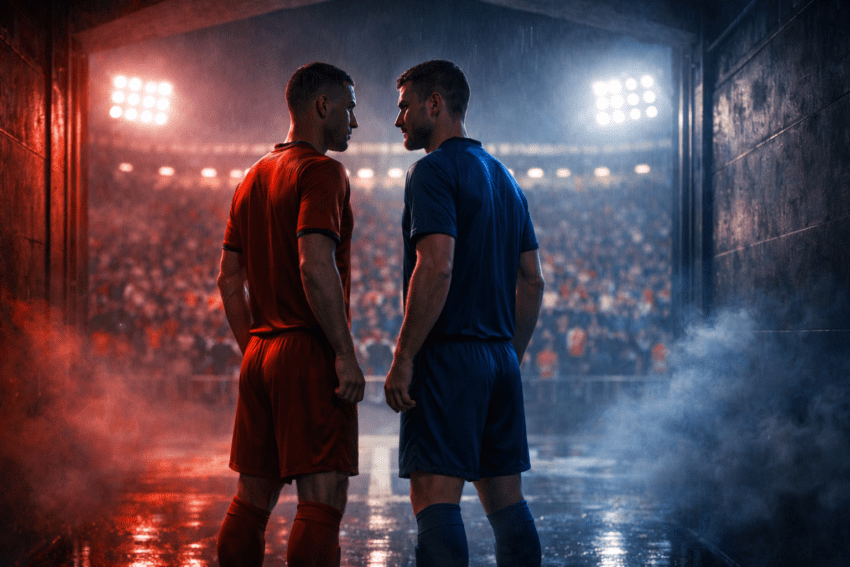
Premier League Derbies: Why Form Goes Out the Window
In English football, people say it all the time: in a derby, form goes out the window. It sounds like a cliché, but in the Premier League it survives for a reason. Derby matches are not just fixtures between nearby clubs. The league itself defines a derby as a match between geographically close teams, usually from the same city or region, with fierce rivalry attached to it. The official list for the 2025/26 season even includes 50 such matches, which shows how central derbies are to the competition’s identity.
What makes the phrase interesting is that it is not really saying form becomes irrelevant. It is saying form becomes less stable, less predictive and less comfortable to trust. Former Manchester City winger Shaun Wright-Phillips put it bluntly in a Premier League feature ahead of the Manchester derby: “form goes out of the window.” His point was simple, neither side enters that kind of game thinking like it is just another line on the schedule.
That is why derby football so often feels different from the table, different from recent xG charts and different from the previous three weekends. The same players are on the pitch, but the context changes everything.
What makes a Premier League derby different from a normal fixture
Geography, identity and memory
A normal Premier League match is about points. A derby is about points plus identity. The Premier League’s own rivalry explainers around the North London derby and its derby fixture guides make clear that these matches are rooted in geography, local pride and long memory. The clubs are close, the fanbases overlap socially, and the stories last for years, sometimes decades.
That memory matters because derby matches are never experienced in isolation. A supporter does not watch Arsenal against Spurs or Liverpool against Everton as a fresh event with no past. They bring old defeats, old celebrations, old insults and old heroes into the day. The match begins before kickoff because emotionally it has already started in the week leading up to it.
Why emotion changes the match
Once emotion rises, football changes shape. Players press a little harder, tackles bite earlier, clearances get louder reactions and small mistakes feel bigger. The FA’s coaching resources underline that football performance should be understood through technical, physical, psychological and social factors together, not as separate boxes. They also stress that realistic opposition raises unpredictability and uncertainty, which is exactly what derby football amplifies.
That is why derbies so often resist calm logic. The better team still may be better, but the game becomes more emotional, more unstable and more vulnerable to swings in confidence.
Why recent form often becomes less reliable in derby matches
Adrenaline raises the floor of the underdog
One reason people say form goes out the window is that derby adrenaline can raise the level of the team that looked weaker on paper. A side that has been passive for weeks can suddenly play with urgency because the emotional stakes are obvious. The Premier League’s own derby previews often frame these games as possible turning points, especially when one or both clubs are underperforming. Ahead of a recent Manchester derby, the league explicitly asked whether the game could ignite the season for either side.
That is important because underdogs in derbies do not always need to become brilliant. Sometimes they only need to become sharper, braver and more committed than usual. In that environment, recent form can lose some of its predictive value.
Pressure can flatten the better team
The opposite effect also happens. The team in better form often carries more weight into the match. It has more to lose, more media expectation and more pressure not to “mess this one up.” In normal matches, confidence helps. In derbies, confidence can harden into tension.
The FA’s psychological guidance for coaches emphasizes the importance of preparing players for pressure and uncertainty rather than assuming performance will stay stable under match stress. That fits derby football perfectly. The better side can become cautious, overcontrolled or emotionally reactive because the game does not feel routine anymore.
That is why a derby often punishes the team that tries hardest to keep everything normal. It is not normal, and pretending otherwise can make the emotional shock bigger when the match becomes messy.
One moment can rewrite the script
Derbies also become less predictable because a single moment can distort the whole game. A red card, a reckless challenge, a crowd surge after an early goal, one confrontation near the touchline, all of it can drag the match away from the neat logic of form and into the raw logic of rivalry.
When matches carry that much emotional charge, the script is easier to break. A side with superior shape, better depth and stronger recent results can still be thrown off course by one derby moment that changes the stadium atmosphere and the players’ emotional state. That is what people really mean when they say form goes out the window. They mean the game becomes easier to bend.
Three derby examples that show the pattern
Manchester derby
The Manchester derby is the cleanest modern example of this idea because the phrase itself has been used around it by the Premier League. Wright-Phillips’ argument was not that tactics stop mattering. It was that both teams enter with a different emotional frame. Even when one club looks far more convincing on recent evidence, the match carries too much pride to be processed like a standard fixture.
Premier League analysis around recent Manchester derbies also shows how strange these games can become tactically. One official piece described a flat, tight 0-0 as a match where caution, shape and derby tension overruled entertainment, while another framed the derby as a possible reset point for struggling sides. In other words, the derby became less about form continuation and more about emotional survival and symbolic momentum.
Merseyside derby
The Merseyside derby has always had a different emotional tone, intense, local and often chaotic. Premier League coverage around Liverpool and Everton repeatedly points to how competitive the fixture remains regardless of broader context. One official analysis before a recent meeting highlighted Everton’s resilience and Liverpool’s small performance dip, presenting the derby as a match likely to become “very competitive” rather than obedient to league hierarchy.
There is also the symbolic weight of venue and history. The Premier League highlighted Everton’s win over Liverpool in Jürgen Klopp’s final Goodison Park derby as a landmark moment, their first home derby league win over Liverpool since 2010. That result mattered far beyond form because the derby itself carried emotional force strong enough to reshape the narrative.
North London derby
The North London derby may be the purest example of identity driving intensity. The Premier League describes it as one of the fiercest rivalries in its history and recently revisited ten memorable moments from the fixture, which says a lot about how thick the emotional archive is.
In a match like Arsenal against Spurs, there is very little emotional neutrality. Fans, players and media all arrive with a sharpened sense of consequence. Even when Arsenal or Tottenham appears more stable, the derby can drag the game into a much more volatile space, especially once the crowd feels the first swing of momentum. That is why this fixture so often produces emotional football first and clean form logic second.
The mental side: why derbies feel heavier than other league games
The mental difference is enormous. A player can treat a normal away game at a mid table ground as a technical challenge. A derby is also a social challenge. Friends text before it. Family members talk about it. The crowd reacts to everything harder. Every moment feels more visible.
The FA’s 4 Corner Model is useful here because it reminds us that football is not just technical execution. Psychological and social pressure matter too, and derby matches multiply both. The match is not merely played by feet and tactical patterns, but by nerve, attention and emotional regulation.
This is also why experienced players are so prized in derby football. Not because they care less, but because they are better at carrying tension without letting it wreck decision making. The best derby performers are often the ones who can stay emotionally hot but mentally clear.
The tactical side: why derby football often looks uglier, tighter and less predictable
Derbies are often described as bad games with great tension, and that is not an insult. It is a clue. Rivalry matches frequently become tighter because both teams know the emotional cost of mistakes. They may press harder, but they also simplify. Passes go safer, duels go more direct and the game can narrow into second balls, restarts and transitions.
Official Premier League analysis around derby matches regularly shows this pattern. Games become compact, tactical risks are reduced or distorted, and the match may look far less fluid than recent form suggested it would.
That ugliness is part of why form becomes less trustworthy. A well coached team usually wants the game played in familiar conditions. A derby often refuses those conditions. It becomes a match about who adapts fastest to emotional and tactical disorder.
Derby match vs normal league match
| Factor | Normal league match | Premier League derby |
|---|---|---|
| Emotional temperature | Usually controlled | High from kickoff |
| Media narrative | Match specific | Identity driven |
| Value of recent form | Relatively strong guide | Less stable guide |
| Tactical rhythm | More predictable | More disrupted |
| Crowd influence | Strong | Extreme |
| Cost of mistakes | Important | Feels amplified |
Conclusion: why form matters, until the whistle blows in a derby
So, does form really go out the window in Premier League derbies? Not completely. Stronger teams still tend to have stronger structures, better players and more solutions. But derby football changes the environment so much that form stops behaving like a clean forecasting tool.
The Premier League’s own derby framing, from rivalry explainers to match analysis to Wright-Phillips’ blunt description of the Manchester derby, supports the same basic truth: these fixtures are emotionally overloaded and therefore harder to model like ordinary matches.
That is why the phrase survives. It is not anti analysis. It is analysis with context. In derbies, the table still matters, but the atmosphere matters almost as much.
FAQ
What is officially considered a Premier League derby?
The Premier League describes a derby as a match between teams that are geographically close, usually from the same city or region, and fierce rivals. It even notes an exception in the case of Brighton and Crystal Palace.
Does form really become meaningless in a derby?
No. Form still matters because better teams usually have stronger fundamentals. The point is that derby conditions make form less reliable than usual because the match is more emotional, more volatile and more easily changed by one incident.
Why do underdogs often look better in derby matches?
Because derby intensity can raise concentration, aggression and commitment. A team that lacks fluency in recent matches may still lift its floor emotionally in a rivalry game, which narrows the gap.
Which Premier League derby best fits the phrase “form goes out the window”?
The Manchester derby is the clearest example in wording because Shaun Wright-Phillips used that exact phrase in Premier League coverage. But the Merseyside derby and North London derby show the same pattern in different ways.
Is derby unpredictability mostly psychological or tactical?
It is both. The FA’s coaching resources emphasize that technical, physical, psychological and social factors work together, and derby football is a perfect example of that overlap.