
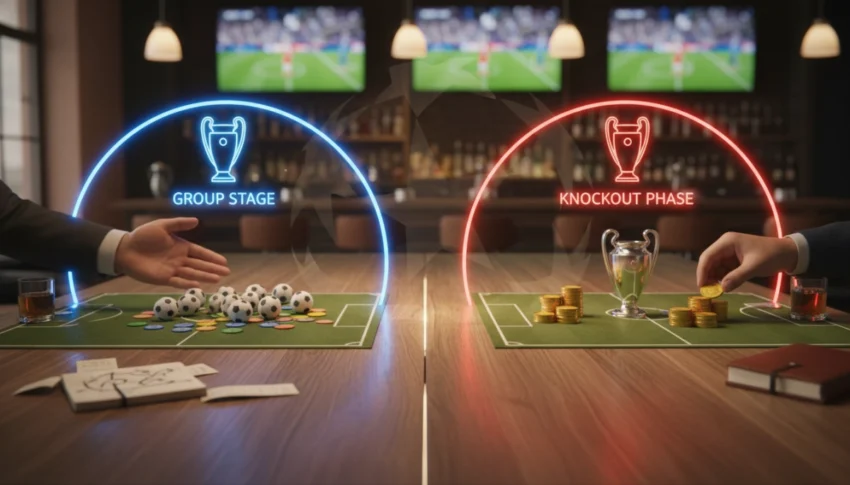
Why the Same Market Hits Differently Depending on the Round
Most bettors approach every Champions League match the same way. They check the form, pick a market, place the bet. The problem is that the competition itself changes shape as it progresses — and the markets move with it, even when the odds don’t immediately show it.
A both teams to score bet on a group stage fixture between two evenly matched sides is a very different proposition to the same bet in a second-leg knockout tie where one team is defending a two-goal lead. The teams might look similar on paper. The context is completely different. That gap between what the market offers and what the situation actually demands is where a lot of Champions League betting money quietly disappears.
Understanding this isn’t about becoming a professional analyst. It’s about watching the competition more carefully — which most Kenyan fans already do — and letting that knowledge shape the bets you place.
How Group Stage Football Creates Different Betting Conditions
Group stage matches carry a built-in looseness that knockout football simply doesn’t have. Teams are experimenting with shape, rotating squad players, testing tactical setups, and sometimes managing results rather than chasing them. A top side that’s already qualified might field a mixed lineup. A team desperate for points might overcommit forward. Neither situation is unusual — both happen regularly — and both affect how markets behave.
The both teams to score market tends to land more consistently during this phase for a straightforward reason: teams are less locked in defensively. A squad player making a rare start is more likely to leave gaps. A team with nothing to lose at 1-0 down will push forward rather than park. That openness makes BTTS a genuinely attractive market across a wide range of group stage fixtures, not just the high-profile ones.
Asian handicap works differently here too. With so many matches where the favourite isn’t fully motivated or the underdog is fighting for qualification, the handicap lines often compress. Bookmakers price the favourite tightly because the margin looks obvious, but the group stage is full of results that defy that logic. A -1 Asian handicap on a team resting three starters is far riskier than the number suggests.
- Group stage sides rotate more freely — check confirmed lineups before committing
- Teams already qualified often protect fitness over results in the final matchday
- Low-stakes group ties can produce high-scoring, open matches — or flat, disengaged ones
- Asian handicap lines in the group stage frequently overestimate the favourite’s motivation
The group stage essentially offers volume and variety. There are eight matchdays packed with fixtures, and the conditions favour bettors who pay attention to context rather than just picking winners by name. But once the competition reaches the knockout rounds, the entire dynamic shifts — and if the betting approach doesn’t shift with it, the results usually show.
Knockout Football Demands a Different Kind of Discipline
The moment the competition enters the round of sixteen, the atmosphere changes — and so does the mathematics of how teams approach ninety minutes. Managers stop experimenting. Rotations tighten. The priority shifts entirely from playing well to surviving and advancing, which creates a very particular brand of football that punishes bettors who are still thinking in group stage terms.
Two-legged ties introduce an element that simply doesn’t exist earlier in the competition: the aggregate score. A team travelling away in the first leg isn’t just trying to win that match — they’re trying to control the tie across one hundred and eighty minutes minimum. That awareness shapes every tactical decision from the first whistle. Deep defensive blocks, disciplined transitions, and deliberate tempo-control become the tools of the trade, particularly for teams facing stronger opposition at home in the second leg.
What this means practically is that both teams to score becomes a far less reliable market in first-leg knockout fixtures. Teams defending a clean sheet away from home aren’t simply being cautious — they’re executing a deliberate strategic plan that can hold even when they’re under pressure. The absence of a goal from one side isn’t a surprise in this context; it’s often the intended outcome.
Reading the Second Leg Differently
If first legs reward caution, second legs reward context. The score from the first match essentially rewrites the game you’re watching. A side needing to overturn a one-goal deficit plays completely differently to a side protecting a two-goal lead at home — and both scenarios produce betting conditions that have almost nothing to do with the raw quality of the teams involved.
Asian handicap lines in second-leg matches are particularly sensitive to this. A team that looks like a clear favourite on paper might be managing the tie rather than chasing the match, which makes a -1 or -1.5 handicap genuinely dangerous. Equally, a side that appears to be the underdog but needs to score to progress will push forward with an urgency that the odds rarely fully reflect. That combination — motivation misread by the market — is one of the more consistent edges available in knockout betting.
- First-leg away sides often play for the clean sheet, suppressing BTTS rates considerably
- Second legs become unpredictable when the aggregate margin is narrow — high-intensity, high-variance football
- A team trailing on aggregate and chasing the match will often leave space on the counter, opening goal opportunities for both sides
- Asian handicap lines on second legs frequently fail to account for how the aggregate situation alters each side’s game plan
Extra Time and the Late Drama Problem
One layer of knockout betting that doesn’t get enough attention is how the possibility of extra time warps the final twenty minutes of a tied match. When the scores are level on aggregate deep into the second leg, teams don’t just push forward recklessly — they calculate. A side that scores and takes the lead might immediately sit back and protect rather than push for a second, knowing that winning by any margin advances them. A side conceding late might accept the tie and manage into extra time rather than risk being caught overcommitted at the back.
This late-game behaviour makes markets like Asian handicap and over goals particularly difficult to call in the final thirty minutes of close knockout ties. The in-play momentum that would normally translate into goals gets interrupted by tactical conservatism that bettors watching the flow of the match don’t always anticipate. The game can look open and aggressive while both sides are quietly managing the risk of overextension — a mismatch between appearance and intent that makes reactive in-play betting on these matches genuinely hazardous unless you’re reading the aggregate situation clearly in real time.
Understanding this isn’t pessimistic — it’s clarifying. It tells you which moments in a knockout tie carry genuine market value, and which moments are simply noise that looks like opportunity.
Letting the Competition Phase Do the Analytical Work for You
The Champions League is one of the few competitions where the structure itself hands you a reliable framework for thinking about bets. You don’t need to reinvent your approach for every fixture — you need to recognise which phase you’re in and let that shape which markets deserve attention and which ones carry hidden risk that the odds aren’t reflecting.
In the group stage, the value tends to cluster around markets that benefit from open, motivated football where both sides have something to play for. Both teams to score and total goals markets perform better when lineups are competitive and qualification is unresolved. The moment a team has already advanced or has nothing meaningful left to win, those same markets become traps — and the group stage serves up that situation regularly in its final round of fixtures.
In the knockout rounds, the logic inverts. The discipline required to navigate two-legged ties pushes you toward markets where you’re reading aggregate context rather than single-match form. Asian handicap selections need to account for whether a team is genuinely trying to win the match or simply trying to manage the tie. Those are not the same objective, and the difference between them is worth several goals across ninety minutes. Bettors who understand how UEFA structures the Champions League knockout format are better placed to interpret what each result actually means to the teams involved.
The practical discipline this builds is simple but genuinely useful: before placing any Champions League bet, ask what this fixture means to both teams at this specific moment in the competition. Not what the form table says. Not what the head-to-head record suggests. What does advancing, or not, mean right now — and how does that change the way these teams will play the ninety minutes in front of you?
That question alone will separate a large number of poor bets from considered ones. The markets that consistently bleed bettors dry in this competition are rarely mispriced in an obvious way — they’re mispriced because the situational context was ignored. The phase of the competition tells you almost everything you need to know about which side of that equation you’re standing on.
Approach the group stage with volume and selectivity. Approach the knockouts with restraint and a clear reading of what each team actually needs. Do both consistently, and the Champions League stops being a competition where you react to names on a team sheet and starts being one where the structure itself guides your thinking — which is exactly where the edge lives.