
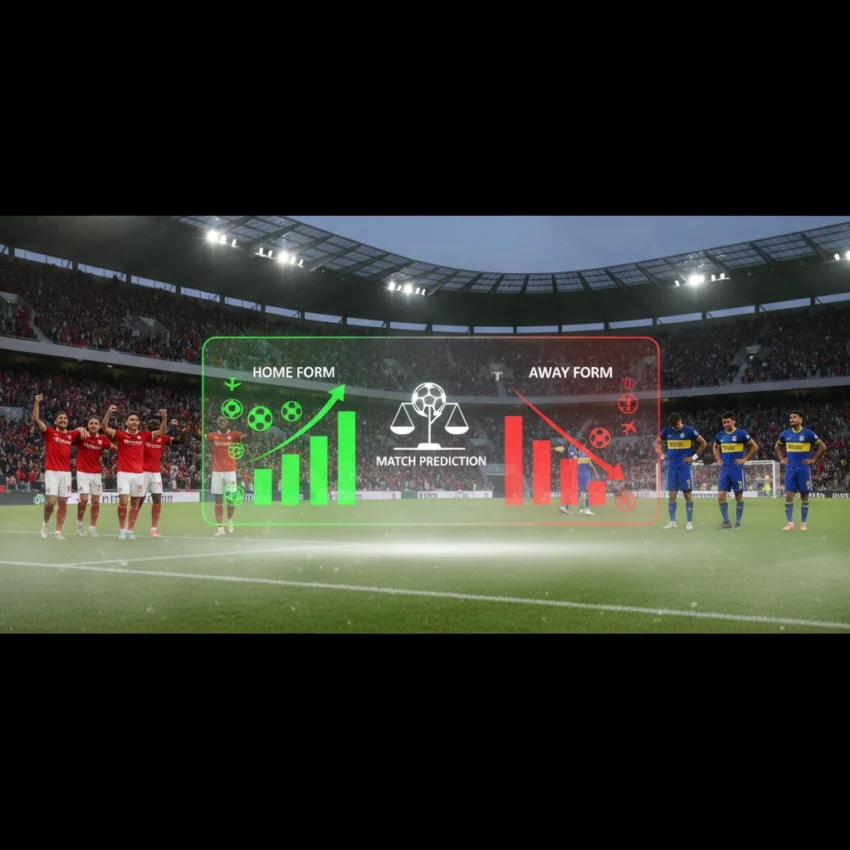
Why Where a KPL Team Plays Matters More Than Most Bettors Realise
Most people picking KPL matches look at the league table and call it done. They see a team sitting mid-table, assume they’re average, and either skip the game or throw a blind bet on the favourite. That approach misses one of the most useful signals in the data — where those points were actually won.
Home and away form in the Kenyan Premier League can diverge sharply. A team that looks solid in the standings might be carrying the bulk of their points from home fixtures while struggling consistently on the road. The reverse is also true. When that pattern exists and a bettor ignores it, they’re essentially betting blind on half the picture.
This matters practically because KPL fixtures have real quirks that influence results. Pitch conditions vary across venues. Crowd atmosphere at grounds like Kasarani or Nyayo can shift a match’s dynamic. Travel distances for away sides aren’t trivial. These factors show up in the numbers when you know where to look.
How to Actually Read the Form Data Without Overcomplicating It
The starting point is simple: separate a team’s home record from their away record before drawing any conclusion. Most KPL standings blend the two together and smooth out patterns that should be visible. The useful information lives in the split.
Look at three things for each team across their most recent eight to ten matches:
- Win, draw, and loss percentages at home versus away
- Goals scored and conceded in each setting separately
- How consistent those patterns have been — a short run of results versus a sustained trend
A team winning 70 percent of home games but losing more than half their away fixtures isn’t a mid-table side — they’re a strong home team with a real weakness on the road. That’s a very different proposition depending on where the next match is played, and it directly affects which markets make sense to back.
For KPL predictions, split reading is often more reliable than league position alone because the division is competitive enough that points cluster tightly. Two teams level on points might have completely opposite home-away profiles, which changes the expected outcome of a head-to-head entirely.
The Markets Where Home and Away Form Has the Most Impact
Once the split is clear, the next step is connecting it to the right betting markets. The match result market is the obvious starting point, but it’s rarely where the sharpest value sits. Teams with lopsided home form tend to be priced accordingly by bookmakers. The more interesting opportunities often appear in goals markets — and understanding how a team’s output shifts between home and away settings is what makes those markets readable.

Breaking Down Goals Markets Using Home and Away Scoring Patterns
The over/under goals market is where home and away form data tends to deliver the clearest edge. A team’s goals-per-game average at home and away can differ significantly, and when both teams’ split records are placed side by side, you get a sharper read on what kind of game is likely to unfold than any combined average could offer.
Start by pulling the average goals scored and conceded for each team in their respective settings. If the home side averages two goals per game at their ground while the visiting team concedes 1.8 on the road, the picture already leans toward goals. Check the away team’s attacking output in away fixtures — if they score regularly on the road, the case for an over strengthens. If they go quiet when travelling, that might shift interest toward an under line or a lower correct score.
In the KPL specifically, certain away sides become genuinely cautious on the road — they sit deeper, prioritise not losing, and produce low-scoring matches that a surface-level look at their season tally would never suggest.
Using the Data to Assess Both Teams to Score Bets
The both teams to score market depends on a specific combination — whether each team has the attacking output to trouble the other, and whether each defence has the vulnerabilities to be troubled. Home and away splits make this clearer than overall season averages.
A team that scores in most home matches but blanks regularly on the road is a red flag for BTTS when they’re the away side. Conversely, a home team with a leaky home defence that still scores regularly creates the right conditions for BTTS to land. Running through these combinations before selecting the market is a five-minute process that removes much of the guesswork.
Applying Form Splits to Asian Handicap and Draw No Bet Markets
Home and away data becomes particularly powerful when removing ambiguity around closely matched fixtures. A team with a strong home record that rarely draws at their own ground is a different proposition to one that habitually plays out low-scoring draws in front of their own supporters. The first type lends itself well to Draw No Bet on the home side. The second might make the draw the correct outright selection, especially if the away team also trends toward draws on the road.
Asian handicap markets follow similar logic. If a home team’s record shows they regularly win by a single goal against comparable opposition, a -0.5 or -1 handicap starts to look more grounded than it might on a generic odds screen. You’re not guessing at a margin — you’re anchoring the selection in a pattern that has repeated across multiple home fixtures.
- Draw No Bet suits home sides with high win rates and low draw frequency at home
- Asian handicap selections become more defensible when margin-of-victory patterns are consistent
- Away teams with strong road records can justify backing on a +0.5 or level handicap against higher-ranked opposition
- Fixtures where both sides have neutral home-away splits warrant more caution and smaller stakes
The discipline here is to let the data narrow the market selection first, then assess the odds. Too many bettors work in reverse — they see a price they like and look for evidence to justify it. Running the home and away split before checking odds keeps the reasoning clean.
Turning Split-Form Habits Into a Consistent Pre-Match Routine
The gap between a bettor who occasionally checks form and one who uses it systematically is mostly a matter of habit. Before any fixture, the routine should take roughly ten minutes. Pull each team’s home and away records separately. Note the goals patterns in each setting. Check whether those patterns have been consistent over the last two months or skewed by one or two outlier results. Then let those findings point you toward the market — not the other way around.
Over time, this builds something more valuable than any single winning bet: a calibrated sense of which KPL fixtures carry genuine structural signals and which are too unpredictable to justify anything beyond a small speculative stake. Betting less often, but with cleaner rationale, consistently outperforms spreading stakes across murky matches.
It also makes losing bets easier to process. When a well-reasoned selection doesn’t land, you can review the logic dispassionately and understand whether the data was misread or whether the result was simply variance. Bettors who can’t separate poor process from bad luck tend to either chase losses or abandon sound methods after a rough run — both costly errors.
For those looking to deepen their approach, resources like Transfermarkt can supplement KPL research with broader squad and performance context that adds another layer to fixture assessment.
The Kenyan Premier League rewards structured attention more than most bettors expect. Home-away divergences are frequently underweighted in the odds, particularly for matches outside the headline fixtures. The bettor who reads split data carefully is working with an advantage most of the field is leaving on the table. Use it consistently, stay disciplined about which markets reflect what the numbers are telling you, and treat each fixture as its own problem to solve. Sound reasoning compounded over time is the only edge worth building.